
この戦争のタイマーはミサイルではなく、ホルムズ海峡を通過するタンカー
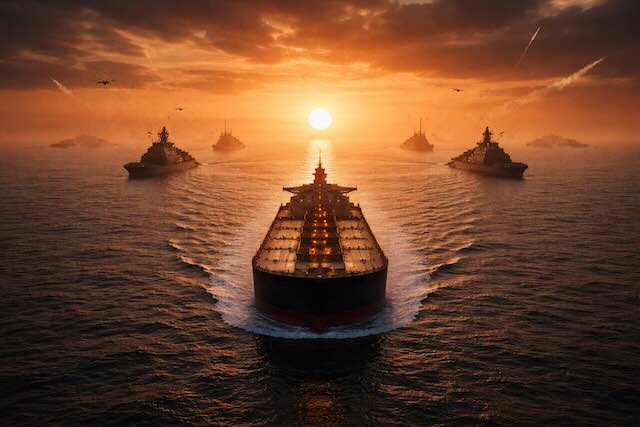
この戦争のタイマーはミサイルではありません。ホルムズ海峡を通過するタンカーです。
米国とイスラエルによるイラン攻撃は、当初想定されていた短期作戦の枠を超え、中東全域を巻き込む緊張へと発展しています。ホルムズ海峡は事実上封鎖され、湾岸諸国のエネルギーインフラも攻撃対象となりました。米国は海峡の安全確保のため、日本、中国、欧州諸国などに艦船派遣を期待すると表明しています。
しかし、この戦争の帰結を決めるのは軍事ではありません。コストです。
ホルムズ海峡は世界の原油輸送の約2割、液化天然ガスの約2割が通過するエネルギー輸送の大動脈です。ここが不安定になるだけで、世界経済は大きく揺れます。実際、原油価格は数日のうちに1バレル87ドルから99ドルまで上昇しました。
重要なのは供給量ではなくリスクです。
海峡で機雷やドローン、沿岸ミサイルが使われると、まず保険市場が反応します。戦争保険の引き上げによってタンカーの航行が止まり、物理的な封鎖より先にエネルギー市場が混乱します。石油メジャーの経営者たちも米政権に対し、ホルムズ海峡を通るエネルギー輸送の混乱が続けば、世界のエネルギー市場のボラティリティがさらに高まる可能性があると警告しています。
エネルギー市場の混乱は単に原油価格にとどまりません。輸送コスト、保険料、精製マージン、そしてインフレ期待を通じて金融市場全体に波及します。つまり、この戦争のコストはエネルギー市場だけでなく、資本市場を通じて世界経済全体に拡散していく構造になっています。
この構造は極めて非対称です。
海峡封鎖は比較的低コストで実行できます。ドローン、機雷、小型艇、短距離ミサイルといった兵器で十分だからです。一方で、それを防ぐ側は空母打撃群、掃海作戦、艦隊護衛といった極めて高コストの軍事作戦を必要とします。つまり「安い攻撃と高い防衛」という典型的な非対称戦争です。
そのため米国はコストの国際化を図っています。海峡の安全確保は米国単独ではなく、ホルムズ海峡に依存する国々が共同で負担すべきだという考え方です。今回トランプ政権が名指しした日本、中国、韓国、フランス、英国は、いずれもエネルギー輸送の影響を強く受ける国々です。
しかし、どの当事者にとっても長期戦は困難です。
米国にとっては空母打撃群の長期展開が中国抑止を弱めるリスクがあります。原油価格上昇は国内政治にも直結します。イラン側もホルムズ封鎖を長期化させれば自国の石油輸出を阻害することになります。世界経済もまた、エネルギー価格の高騰に耐えられる時間は限られています。
戦争は感情で始まることがあります。しかし終わりを決めるのはコストです。
この戦争のタイマーはミサイルではありません。ホルムズ海峡を通過するタンカーです。
The timer of this war is not missiles. It is the tankers moving through the Strait of Hormuz.
The U.S. and Israeli attacks on Iran have evolved beyond what was initially expected to be a short military operation. Tensions are spreading across the Middle East. The Strait of Hormuz is effectively disrupted, and energy infrastructure in Gulf states has become a target. The United States has called on countries such as Japan, China, and several European nations to dispatch naval vessels to help secure the sea lanes.
However, the outcome of this conflict will not be determined by military power. It will be determined by cost.
The Strait of Hormuz is the main artery of global energy transportation. Roughly 20 percent of the world’s oil shipments and about 20 percent of global LNG flows pass through this narrow corridor. Instability there immediately shakes the global economy. Oil prices have already jumped from $87 to $99 per barrel within days.
The key issue is not supply. It is risk.
When mines, drones, or coastal missiles appear in the strait, the first reaction comes from the insurance market. War-risk premiums surge, and tanker traffic slows or stops. In practice, financial disruption can precede physical blockade. Oil industry executives have also warned the U.S. administration that continued disruption of energy flows through the Strait of Hormuz could further increase volatility in global energy markets.
The disruption in energy markets does not stop at oil prices. It spreads through transportation costs, insurance premiums, refining margins, and inflation expectations, ultimately reaching global capital markets. In other words, the cost of this conflict is transmitted not only through energy markets but also through financial markets, amplifying its impact on the global economy.
The structure of this conflict is highly asymmetric.
Closing the strait is relatively inexpensive. Drones, naval mines, small boats, and short-range missiles are sufficient. Defending it, however, is extremely costly. Carrier strike groups, mine-sweeping operations, and naval escorts require enormous resources. This is a classic case of cheap offense and expensive defense.
For this reason, Washington is attempting to internationalize the cost. Securing the strait should not be a U.S. responsibility alone. Countries that depend heavily on Hormuz energy flows should share the burden. The nations mentioned by the Trump administration—Japan, China, South Korea, France, and the United Kingdom—are precisely those most exposed to the disruption.
Yet none of the parties can sustain a prolonged conflict.
For the United States, keeping major naval assets in the Middle East weakens deterrence against China. Rising oil prices also carry significant domestic political consequences. Iran, on the other hand, cannot maintain a long blockade without damaging its own oil exports. And the global economy itself cannot endure prolonged energy price shocks.
Wars may begin with emotion, but they end with cost.
The timer of this war is not missiles. It is the tankers moving through the Strait of Hormuz.
大原達朗が行うBBT大学での講座93%が満足と回答したファイナンスドリブンキャンプ
本講座では、短期間でCFO(最高財務責任者)への第1歩を踏み出すことを目指します。大量の決算書に触れ、大量にアウトプットし、大量のフィードバックを通してファイナンスという武器を手に入れられます。ブログでは話せない「ライブ講義」も充実しています。まずは無料説明会を受講してみて下さい。
本誌について
本誌は、M&Aを売り手、買い手、アドバイザーが三方良し、となるのが当たり前の世界の実現を目指しています。そのためには当事者が正しい情報を得て、安心して相談のできる場が必要です。その実現に向けて本誌は、日本M&Aアドバイザー協会で、以下のサービスやセミナーを提供しております。
| M&A仲介・アドバイザーを事業としたい方・既にされている方へ | |||
|---|---|---|---|
| セミナー・サービス名 | 詳細 | 金額 | 時間 |
| 誰にでもわかるM&A入門セミナー | ・会場開催の詳細とお申込み ・オンライン講座の視聴 |
無料 | 2時間 |
| M&A実務スキル養成講座 | ・会場開催の詳細とお申込み ・オンライン開催の詳細とお申込み ・M&A実務スキルの詳細 |
198,000円 | 2日間 |
| JMAA認定M&Aアドイザー資格取得およびJMAA会員に入会 | ・資格詳細とお申し込み | 入会金33,000円 月会費11,000円(1年分一括払) | - |
| 案件サポート制度 | JMAA会員が初めてM&Aアドバイザリー業務に取り組む場合、あるいはすでに何度かアドバイザリー業務に経験があっても、難易度が高い案件の場合のための、JMAA協会が会員に伴走して案件成約に向けて協力する制度です。 お申し込みは当協会ご入会後にお知らせします。 | JMAA正会員の関与する対象案件の成功報酬の50% | - |
| 買収を検討されている企業団体様へ | |||
| セミナー・サービス名 | 詳細 | 金額 | 時間 |
| 誰にでもわかるM&A入門セミナー | ・会場開催の詳細とお申込み ・オンライン講座の視聴 |
無料 | 2時間 |
| M&A実務スキル養成講座 | ・会場開催の詳細とお申込み ・オンライン開催の詳細とお申込み ・M&A実務スキルの詳細 |
198,000円 | 2日間 |
| 買い手様向けセカンドオピニオンサービス | ・M&Aセカンドオピニオンサービスの詳細 | 33,000円 追加相談サービス 33,000円/1時間 | 1時間〜 |
| 売却を検討されている企業団体様へ | |||
| セミナー・サービス名 | 詳細 | 金額 | 時間 |
| 誰にでもわかるM&A入門セミナー | ・会場開催の詳細とお申込み ・オンライン講座の視聴 |
無料 | 2時間 |
| M&A実務スキル養成講座 | ・会場開催の詳細とお申込み ・オンライン開催の詳細とお申込み ・M&A実務スキルの詳細 |
198,000円 | 2日間 |
| 売り手様向けセカンドオピニオンサービス | ・M&Aセカンドオピニオンサービスの詳細 | 33,000円 | 1時間〜 |

M&A実務を体系的に学びたい方は、M&A実務スキル養成講座

メルマガ登録はこちら
ファイナンスドリブンキャンプ
生成AIキャンプ

大原達朗の経営リテラシー-自ら考え、行動しよう-