
ニデックの内部管理体制改善計画と創業者問題の本質
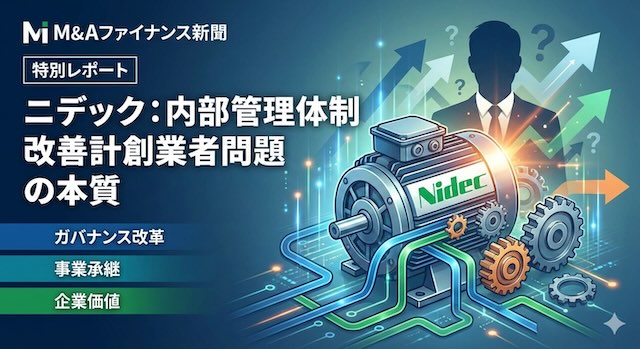
ニデックは、内部管理体制の改善計画を東京証券取引所に提出しました。不適切会計の疑義が生じた原因として、創業者である永守重信名誉会長が掲げてきた「過度な株価至上主義」を挙げ、トップダウンによる利益目標の策定を改める方針を示しています。
ただし、これはあくまで出発点にすぎません。第三者委員会の調査報告書はいまだ提出されておらず、監査法人による監査も、同報告書を前提に追加的な監査手続きを経て実施される予定です。市場が最も注視している「何が起き、どこまで歪み、誰がどのように関与していたのか」という点は、現時点では確定していません。
この問題を考えるうえで、まず論点を整理する必要があります。
第一に、永守名誉会長の功績は揺るぎません。ニデックを世界的なモーターメーカーへと成長させた経営手腕、M&Aを軸とした成長戦略、グローバル展開の推進力。これらは歴史的事実として正当に評価されるべきです。
一方で、第二の論点は別次元にあります。仮に不適切会計の背景に「度を超えた株価至上主義」が存在したのであれば、その影響は功績とは切り離し、明確にクリアにしなければなりません。現在、永守氏は経営からは退いているものの、名誉会長という肩書を持ち、かつ大株主という立場にあります。この状態で「影響力は遮断された」と説明することは、市場にとって説得力を持ちません。
ここに、形式的な経営分離と実質的な影響力の分離という、日本企業に典型的なガバナンス課題が表れています。
ニデックが本気で創業者依存を断ち切り、内部統制と資本市場からの信認を回復したいのであれば、踏み込むべきは資本構造の領域です。具体的には、ニデック自身が永守名誉会長の保有株式を買い取る、あるいはそれに準ずる形で影響力を整理するという選択肢を、正面から検討すべき段階に来ています。
これは単なる株式買取の話ではありません。実質的には、「創業者の時代をどう終わらせるか」という、MBO(マネジメント・バイアウト)に近い論点です。経営から退いたが、株主としての影響力は残る。この曖昧な状態こそが、ガバナンス不全を長期化させ、市場の疑念を引きずる最大の要因になります。
創業者を否定する必要はありません。しかし、影響力を温存したまま過去の問題として処理することも許されません。M&Aの実務では、功績を尊重しつつ、次のフェーズへ進むための明確な出口(Exit)を設計することは、ごく合理的な判断です。
第三者委員会報告書の提出、監査の完了、内部管理体制の実効性確認には、まだ時間がかかります。その時間を単なる沈静化待ちに使うのか、それとも、ガバナンスと資本構造を含めた本質的な再設計に使うのか。ニデックはいま、その選択を迫られています。
改善計画の文言以上に、市場が見ているのは一点です。
**誰が、どこまで、どのような影響力を持つ会社なのか。**
創業者の功績を正当に評価しつつ、影響力を明確に区切る。その覚悟を示せるかどうかが、ニデックの信頼回復を左右します。
Nidec has submitted its internal control improvement plan to the Tokyo Stock Exchange. As the background of the suspected accounting irregularities, the company pointed to the “excessive stock price–oriented management philosophy” advocated by its founder, Mr. Shigenobu Nagamori, Honorary Chairman, and announced that it will abandon top-down profit target setting.
However, this is only the starting point. The report of the third-party investigation committee has not yet been released, and the audit by the external auditor will be conducted only after additional audit procedures based on that report. The key questions for the market—what exactly happened, how far the distortions went, and who was involved—remain unanswered.
To assess this situation properly, the issues must be clearly separated.
First, Mr. Nagamori’s achievements are indisputable. His leadership transformed Nidec into a global motor manufacturer through aggressive M&A, capital allocation, and international expansion. These accomplishments should be evaluated as historical facts.
The second issue is different in nature. If the alleged accounting issues were indeed driven by an excessive focus on stock price performance, that influence must be clearly eliminated, regardless of past achievements. Although Mr. Nagamori has stepped away from management, he remains Honorary Chairman and a major shareholder. Under these circumstances, it is difficult for the market to accept that his influence has been fully neutralized.
This highlights a typical governance challenge in Japanese companies: the gap between formal separation from management and substantive separation of influence.
If Nidec is serious about breaking away from founder dependence and restoring credibility in internal controls and capital markets, it must address its capital structure. One realistic option is for Nidec to repurchase Mr. Nagamori’s shares, or otherwise restructure his ownership in a way that clearly limits his influence.
This is not merely a share buyback issue. In substance, it is close to an MBO-type question: how to conclude the founder’s era. Stepping away from management while retaining significant shareholder influence creates ambiguity, which prolongs governance concerns and market skepticism.
This does not mean denying the founder’s legacy. Rather, in M&A practice, it is common and rational to respect a founder’s achievements while designing a clear exit to move the company into its next phase.
The release of the third-party committee report, completion of the audit, and verification of internal control effectiveness will take time. The critical question is how Nidec uses that time—whether to wait for the situation to settle, or to undertake a fundamental redesign of governance and capital structure.
More than the wording of improvement plans, the market is watching one thing:
**who ultimately holds influence over the company, and to what extent.**
Nidec’s path to restoring trust depends on whether it can clearly define that boundary.
大原達朗が行うBBT大学での講座93%が満足と回答したファイナンスドリブンキャンプ
本講座では、短期間でCFO(最高財務責任者)への第1歩を踏み出すことを目指します。大量の決算書に触れ、大量にアウトプットし、大量のフィードバックを通してファイナンスという武器を手に入れられます。ブログでは話せない「ライブ講義」も充実しています。まずは無料説明会を受講してみて下さい。
本誌について
本誌は、M&Aを売り手、買い手、アドバイザーが三方良し、となるのが当たり前の世界の実現を目指しています。そのためには当事者が正しい情報を得て、安心して相談のできる場が必要です。その実現に向けて本誌は、日本M&Aアドバイザー協会で、以下のサービスやセミナーを提供しております。
| M&A仲介・アドバイザーを事業としたい方・既にされている方へ | |||
|---|---|---|---|
| セミナー・サービス名 | 詳細 | 金額 | 時間 |
| 誰にでもわかるM&A入門セミナー | ・会場開催の詳細とお申込み ・オンライン講座の視聴 |
無料 | 2時間 |
| M&A実務スキル養成講座 | ・会場開催の詳細とお申込み ・オンライン開催の詳細とお申込み ・M&A実務スキルの詳細 |
198,000円 | 2日間 |
| JMAA認定M&Aアドイザー資格取得およびJMAA会員に入会 | ・資格詳細とお申し込み | 入会金33,000円 月会費11,000円(1年分一括払) | - |
| 案件サポート制度 | JMAA会員が初めてM&Aアドバイザリー業務に取り組む場合、あるいはすでに何度かアドバイザリー業務に経験があっても、難易度が高い案件の場合のための、JMAA協会が会員に伴走して案件成約に向けて協力する制度です。 お申し込みは当協会ご入会後にお知らせします。 | JMAA正会員の関与する対象案件の成功報酬の50% | - |
| 買収を検討されている企業団体様へ | |||
| セミナー・サービス名 | 詳細 | 金額 | 時間 |
| 誰にでもわかるM&A入門セミナー | ・会場開催の詳細とお申込み ・オンライン講座の視聴 |
無料 | 2時間 |
| M&A実務スキル養成講座 | ・会場開催の詳細とお申込み ・オンライン開催の詳細とお申込み ・M&A実務スキルの詳細 |
198,000円 | 2日間 |
| 買い手様向けセカンドオピニオンサービス | ・M&Aセカンドオピニオンサービスの詳細 | 33,000円 追加相談サービス 33,000円/1時間 | 1時間〜 |
| 売却を検討されている企業団体様へ | |||
| セミナー・サービス名 | 詳細 | 金額 | 時間 |
| 誰にでもわかるM&A入門セミナー | ・会場開催の詳細とお申込み ・オンライン講座の視聴 |
無料 | 2時間 |
| M&A実務スキル養成講座 | ・会場開催の詳細とお申込み ・オンライン開催の詳細とお申込み ・M&A実務スキルの詳細 |
198,000円 | 2日間 |
| 売り手様向けセカンドオピニオンサービス | ・M&Aセカンドオピニオンサービスの詳細 | 33,000円 | 1時間〜 |

M&A実務を体系的に学びたい方は、M&A実務スキル養成講座

メルマガ登録はこちら
ファイナンスドリブンキャンプ
生成AIキャンプ

大原達朗の経営リテラシー-自ら考え、行動しよう-