
ゴーイングコンサーンからゴーイングリソースへ
ゴーイングコンサーンからゴーイングリソースへ
大前研一氏は30年以上前に「ボーダレス経済」という考え方を提唱しました。
その本質は、資本、人材、技術、情報は国境を越えて移動するため、国家単位で経済を考えると本質を見失うというものです。
私は最近、この考え方は企業経営にも当てはまるのではないかと考えています。
多くの経営者は、
「この会社をどう残すか」
を考えます。
しかし本当に考えるべきことは、
「この資本はどこで最も価値を生むのか」
「この人材はどこで活躍できるのか」
「この技術はどこで社会に貢献できるのか」
ではないでしょうか。
企業は目的ではなく手段です。
私は最近、「成功のExit」という観点から企業経営を考えています。
企業には必ず事業寿命があります。
そこで経営者には大きく4つの選択肢があります。
-
株主還元を進める
-
自社で新事業を創る
-
M&Aや提携で新たな事業ポートフォリオを構築する
-
会社を終わらせる
最後の選択肢は経営破綻を意味しません。
事業売却や統合によって、人材や技術、顧客基盤をより価値の高い場所へ移転するという考え方です。
企業という器はなくなっても、経営資源は生き続けます。
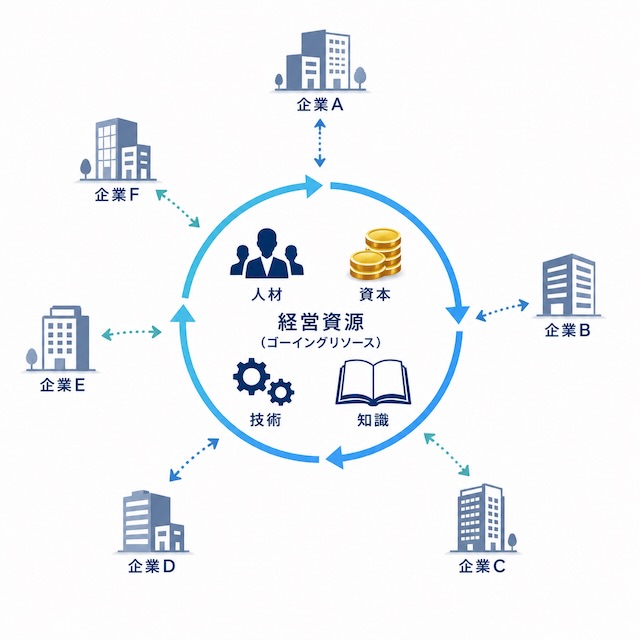
ここで私は、仮にこの考え方を「ゴーイングリソース」と呼びたいと思います。
一般的なゴーイングコンサーンが企業の継続を重視する考え方だとすれば、ゴーイングリソースは経営資源の継続を重視する考え方です。
継続すべきなのは企業そのものではありません。
資本、人材、技術、知識が価値を生み続けることです。
企業はそのための受け皿の一つに過ぎません。
この視点で見ると、ソフトバンクグループの戦略も理解しやすくなります。
一般には通信会社から投資会社へ転身したと説明されます。
しかし本質は違います。
ソフトウェア流通、インターネット、通信、Alibaba、ARM、Vision Fund、AI。
事業は大きく変化してきました。
しかし、
「最も成長する場所へ資本を移動させる」
という考え方は一貫しています。
ソフトバンクグループは事業会社というより、経営資源の最適配分を追求する存在と考えた方が理解しやすいかもしれません。
MVVやパーパスが機能しない企業が多いのも、企業という枠組みの中だけで考えているからではないでしょうか。
「会社は何のために存在するのか」
という問いは重要です。
しかし、その前に問うべきことがあります。
「資本、人材、技術、知識は何のために存在するのか」
という問いです。
企業経営の本当の目的は、会社を残すことではありません。
経営資源を最も価値の高い場所へ配分し続けることです。
ゴーイングコンサーンも、M&Aも、事業売却も、そのための手段に過ぎません。
成功した事業に固執し、資源の移動を止めてしまうことこそが本当の失敗です。
ボーダレス経済が国家の境界を超えたように、これからの経営者には企業の境界を超えて考える視点が求められるのではないでしょうか。
From Going Concern to Going Resource
More than thirty years ago, Kenichi Ohmae introduced the concept of the “Borderless Economy.”
Its core idea was simple: capital, talent, technology, and information move across national borders. Therefore, viewing the economy solely through the lens of nation-states often leads to flawed conclusions.
Recently, I have come to believe that the same logic applies to corporate management.
Most executives ask:
“How can we preserve this company?”
But perhaps the more important questions are:
“Where can this capital create the most value?”
“Where can this talent contribute the most?”
“Where can this technology generate the greatest impact?”
A corporation is a means, not an end.
I have been examining management through the lens of what I call the “Exit of Success.”
Every business has a lifecycle.
When a business matures, management essentially faces four options:
-
Return excess capital to shareholders
-
Build new businesses internally
-
Create a new portfolio through M&A and alliances
-
End the company
The last option does not necessarily mean failure.
It may involve selling businesses or integrating with others so that talent, technology, and customer relationships can move to places where they create greater value.
The corporate entity may disappear, while the underlying resources continue to thrive.
I would like to call this idea “Going Resource.”
If Going Concern emphasizes the continuation of the corporation, Going Resource emphasizes the continuation of the underlying resources.
What should continue is not necessarily the company itself.
What should continue is the value created by capital, talent, technology, and knowledge.
A corporation is merely one platform through which those resources are deployed.
This perspective also helps explain the strategy of SoftBank Group.
Many describe SoftBank as a telecommunications company that transformed into an investment company.
I see it differently.
From software distribution to the internet, telecommunications, Alibaba, ARM, Vision Fund, and AI, its businesses have changed dramatically.
Yet the underlying logic has remained remarkably consistent:
“Move capital to where future growth is greatest.”
In that sense, SoftBank may be better understood not as a telecommunications company or an investment fund, but as an organization focused on the optimal allocation of resources.
This may also explain why many mission, vision, and purpose statements fail to guide meaningful decisions.
Most remain trapped within corporate boundaries.
They ask:
“Why does this company exist?”
But perhaps the more important question is:
“Why do these resources exist, and where can they create the greatest value?”
The true purpose of management is not preserving a corporation.
It is continuously allocating resources to their highest-value use.
Going Concern, M&A, divestitures, and restructuring are all tools toward that objective.
The greatest failure is not business decline itself.
It is becoming so attached to past success that resource mobility stops.
Just as the Borderless Economy challenged us to think beyond nations, future leaders may need to think beyond corporations themselves.
大原達朗が行うBBT大学での講座93%が満足と回答したファイナンスドリブンキャンプ
本講座では、短期間でCFO(最高財務責任者)への第1歩を踏み出すことを目指します。大量の決算書に触れ、大量にアウトプットし、大量のフィードバックを通してファイナンスという武器を手に入れられます。ブログでは話せない「ライブ講義」も充実しています。まずは無料説明会を受講してみて下さい。
本誌について
本誌は、M&Aを売り手、買い手、アドバイザーが三方良し、となるのが当たり前の世界の実現を目指しています。そのためには当事者が正しい情報を得て、安心して相談のできる場が必要です。その実現に向けて本誌は、日本M&Aアドバイザー協会で、以下のサービスやセミナーを提供しております。
| M&A仲介・アドバイザーを事業としたい方・既にされている方へ | |||
|---|---|---|---|
| セミナー・サービス名 | 詳細 | 金額 | 時間 |
| 誰にでもわかるM&A入門セミナー | ・会場開催の詳細とお申込み ・オンライン講座の視聴 |
無料 | 2時間 |
| M&A実務スキル養成講座 | ・会場開催の詳細とお申込み ・オンライン開催の詳細とお申込み ・M&A実務スキルの詳細 |
198,000円 | 2日間 |
| JMAA認定M&Aアドイザー資格取得およびJMAA会員に入会 | ・資格詳細とお申し込み | 入会金33,000円 月会費11,000円(1年分一括払) | - |
| 案件サポート制度 | JMAA会員が初めてM&Aアドバイザリー業務に取り組む場合、あるいはすでに何度かアドバイザリー業務に経験があっても、難易度が高い案件の場合のための、JMAA協会が会員に伴走して案件成約に向けて協力する制度です。 お申し込みは当協会ご入会後にお知らせします。 | JMAA正会員の関与する対象案件の成功報酬の50% | - |
| 買収を検討されている企業団体様へ | |||
| セミナー・サービス名 | 詳細 | 金額 | 時間 |
| 誰にでもわかるM&A入門セミナー | ・会場開催の詳細とお申込み ・オンライン講座の視聴 |
無料 | 2時間 |
| M&A実務スキル養成講座 | ・会場開催の詳細とお申込み ・オンライン開催の詳細とお申込み ・M&A実務スキルの詳細 |
198,000円 | 2日間 |
| 買い手様向けセカンドオピニオンサービス | ・M&Aセカンドオピニオンサービスの詳細 | 33,000円 追加相談サービス 33,000円/1時間 | 1時間〜 |
| 売却を検討されている企業団体様へ | |||
| セミナー・サービス名 | 詳細 | 金額 | 時間 |
| 誰にでもわかるM&A入門セミナー | ・会場開催の詳細とお申込み ・オンライン講座の視聴 |
無料 | 2時間 |
| M&A実務スキル養成講座 | ・会場開催の詳細とお申込み ・オンライン開催の詳細とお申込み ・M&A実務スキルの詳細 |
198,000円 | 2日間 |
| 売り手様向けセカンドオピニオンサービス | ・M&Aセカンドオピニオンサービスの詳細 | 33,000円 | 1時間〜 |

M&A実務を体系的に学びたい方は、M&A実務スキル養成講座

メルマガ登録はこちら
ファイナンスドリブンキャンプ
生成AIキャンプ

大原達朗の経営リテラシー-自ら考え、行動しよう-